
There is a very specific kind of comfort in an Indian meal. You’ve got your steaming dal, a stack of soft rotis, maybe a quick sabzi. But if you grew up in an Indian home, you know the drill: the meal isn’t actually “ready” until someone brings out that little steel katori of achar.
Just one spoonful of pickle next to plain curd rice or a buttered paratha, and suddenly, the whole world feels right again.
In India, pickles aren’t just condiments; they’re time capsules. They hold the scent of summer afternoons, the secret spice ratios guarded by grandmothers, and the patience of a jar sitting in the sun for weeks. If you’ve only ever had the generic, yellow-tinted mango pickles from a grocery store shelf, you are missing out on a massive world of flavor.
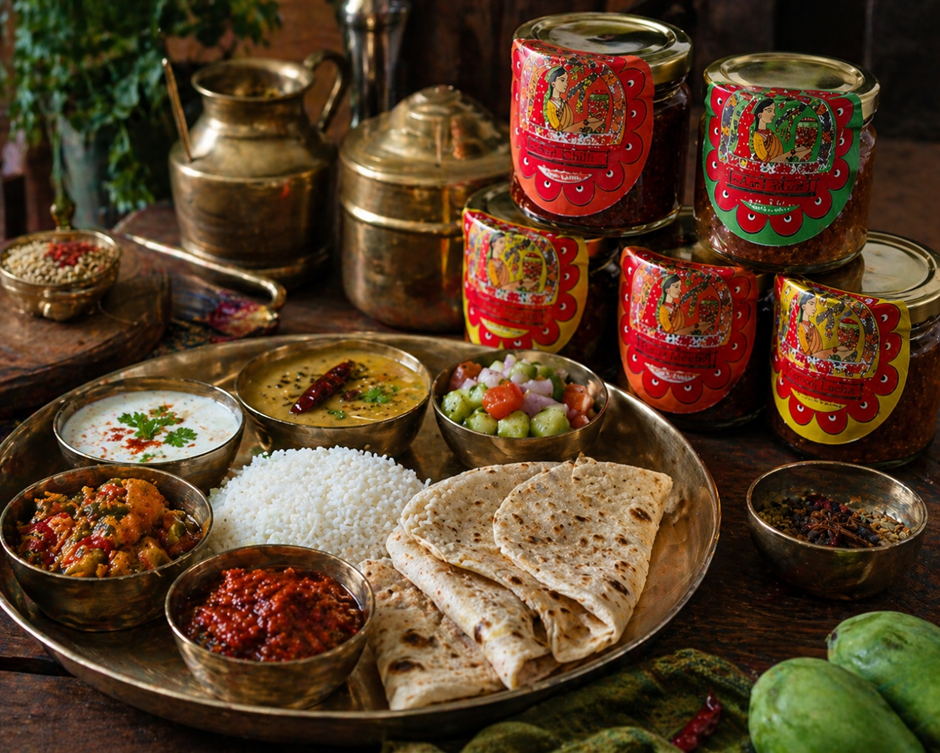
Here are five traditional pickles that will completely change how you look at a simple plate of food.
1. Aam Lacha: The Spirit of a North Indian Summer
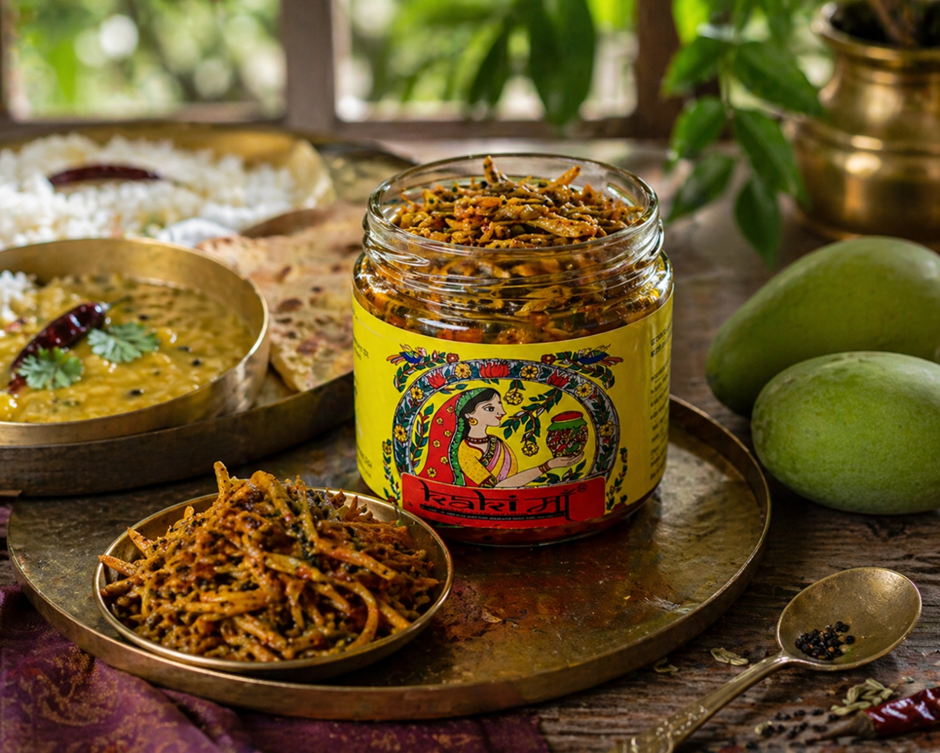
If summer had a flavor, it would be Aam Lacha. Unlike chunky pickles, this one uses raw mangoes shredded into long, thin strips. It’s bold, it’s sharp, and it hits your tongue with an immediate zing.
What makes Lacha special is the texture. Because the mango is shredded, it soaks up the mustard oil, kalonji, and fennel seeds almost instantly, but stays just firm enough to have a bit of a bite. In places like Rajasthan and UP, the arrival of the first mangoes in April means it’s Lacha season. It is the absolute best companion for a lazy afternoon meal of dal chawal.
2. Desi Aam Tukra: Rustic, Chunky, and Honest
This is the hearty, soulful cousin of the Lacha. “Tukra” literally means pieces, and that’s exactly what you get: big, honest chunks of desi mango. These aren’t the polished mangoes you find in fancy stores; these are the tart, fibrous varieties grown in backyard orchards across Bihar and Madhya Pradesh.
The beauty of this pickle is in the aging. The spices seep deep into the fruit over months, creating a layer of flavor that is slightly bitter, intensely tangy, and deeply satisfying. It’s the kind of pickle that demands a thick sattu paratha or a rotis slathered in ghee.
3. Garlic Pickle (Lasoon Achar): The One You’ll Get Hooked On
I’ll be honest: garlic pickle is an acquired taste. It’s pungent and fierce. But once you “get” it, there is no going back.
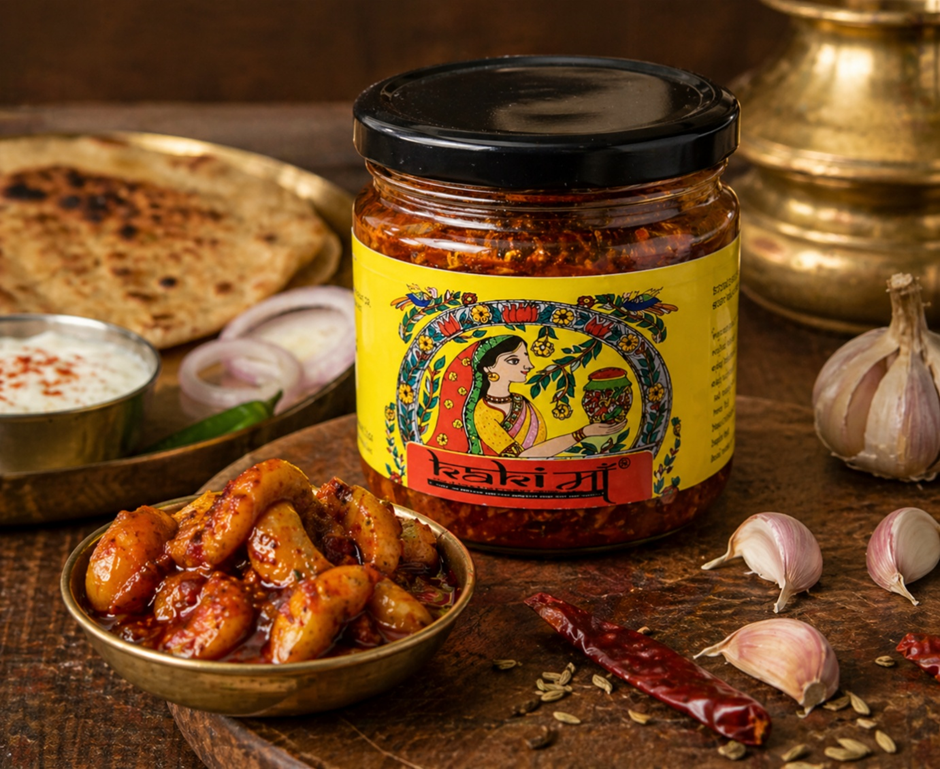
The cloves are marinated in vinegar or lemon juice with a heavy hand of red chili and mustard. As it ferments, the sharp “sting” of the raw garlic mellows out into something savory, mellow, and almost buttery. In Gujarat, they add a tiny bit of sweetness to balance the heat, while Rajasthani versions go full-throttle on the spice. Try a little bit with dal baati or a bowl of biryani, and you’ll see why people obsess over it.
4. Khatti Meethi: A Masterclass in Balance
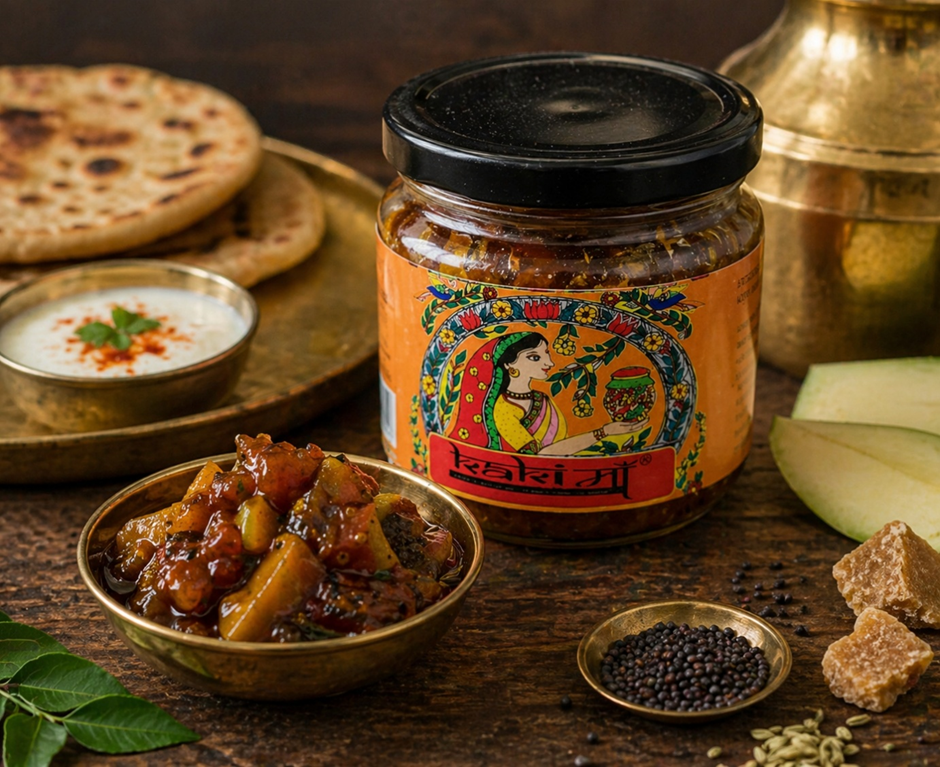
Not everyone wants a pickle that sets their mouth on fire. For those who love a bit of contrast, Khatti Meethi is a revelation. It’s a gorgeous, dark brown mix of raw mango and jaggery, creating a profile that is sweet, sour, and warm all at once.
It’s common in Gujarati and Maharashtrian kitchens, where balancing flavors is a point of pride. It’s less of a “spice kick” and more of a “flavor hug.” It is perfect with thepla or even just swiped onto a piece of plain bread when you want a quick snack.
5. Stuffed Red Chilli: For the Bold
This one is for the people who truly love heat. These are whole, vibrant red chilies stuffed to the brim with a dry masala of mustard seeds, fennel, and salt.
It isn’t just about the burn, though. A good red chili pickle has a nutty depth from the mustard oil and a natural sweetness from the chili skin itself. In the winter months in Rajasthan, a single stuffed red chili served with missi roti and a bowl of fresh dahi is considered a feast.
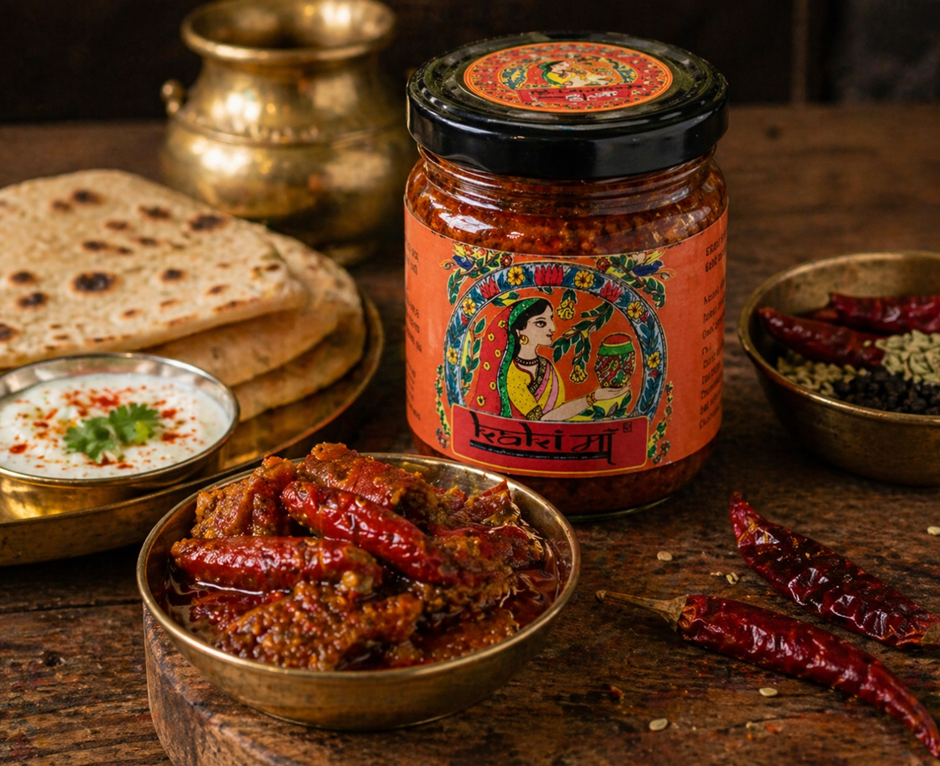
Finding the Real Taste of Home
The sad truth is that most pickles you buy in a supermarket today don’t taste like “home.” They are full of refined oils and artificial preservatives that kill the actual flavor of the fruit and spices. They taste like chemicals, not memories.
If you’re looking for that authentic, small-batch feel without having to spend weeks drying mangoes on your roof, you should check out Kaki Maa.
I love their approach because they actually stick to the old ways. They use pure mustard oil and time-tested recipes that feel like they came straight out of a grandmother’s kitchen. There are no shortcuts or artificial junk—just the kind of pickles that remind you of home. If you want to see what real, traditional achar tastes like, take a look at their collection at kakimaa.com.
A Final Thought
At the end of the day, food is about joy. There’s something beautiful about how a tiny spoonful of pickle can transform a boring meal into something special.
Whether it’s the crunch of aam lacha or the slow heat of a stuffed red chili, these pickles are a part of our heritage. So, the next time you sit down for dinner, leave a little room on the side of your plate for some achar. Your taste buds will thank you.
Do you have a favourite childhood memory associated with a specific pickle jar?
